16 Jun 2026
The Future of Amusement Parks: How AI, AR, and Sustainable Rides Are Shaping Next-Gen Entertainment
In amusement parks, innovation, imagination, and thrill have always come combined. Innovation has been the industry's lifeline from the first mechanical carousels to the enormous roller coasters of today. But the amusement park trade is on the doorstep of a new phase as visitor expectations adjust and concern about sustainability expand everywhere.
For manufacturers, this is about reinventing the entertainment industry's future, not just designing rides. The building, operational supervision, and visitor experience of parks are being altered by emerging technologies that involve artificial intelligence (AI), augmented reality (AR), and sustainable ride designs.
We'll study how manufacturers might keep ahead of the curve in this blog entry as we go into the trends that are altering amusement parks.
1. Smart Parks' Rising: AI at the Heart
Artificial intelligence is enhancing how consumers interact in a variety of industries, such amusement parks, and is no longer strictly for science labs.
AI-Powered Visitors Experience
Take a visitor coming at a theme park where apps that use AI generate a customized plan related to their wait time preferences, age, and preferred type of enthusiasm. They could end up led through the park by virtual assistants whose would offer actual suggestions for rides, meals, or events. In order to comply with AI-driven park operations, manufacturers have to create rides that are integrated with advanced technologies.
Safety and Predictive Maintenance
The core concept of amusement parks is safety. Now, artificially intelligent appliances can anticipate electrical issues before they become escalated, thus reducing downtime. Directly combining IoT sensors and AI monitoring systems into ride ideas is now beginning to give manufacturers a competitive edge.
Dynamic Story
In this blog, we’ll dive into the trends that are redefining amusement parks and explore how the role of an amusement ride manufacturer or theme park ride developer is more critical than ever before.
2. Augmented Reality: Conflict of Reality and Fantasy
The way guests engage with locations is now being revolutionised by the use of augmented reality, or AR. AR adds virtual layers from actual environments to improve them, in opposite of Virtual Reality (VR), which replaces the real world.
AR-Assisted Transit
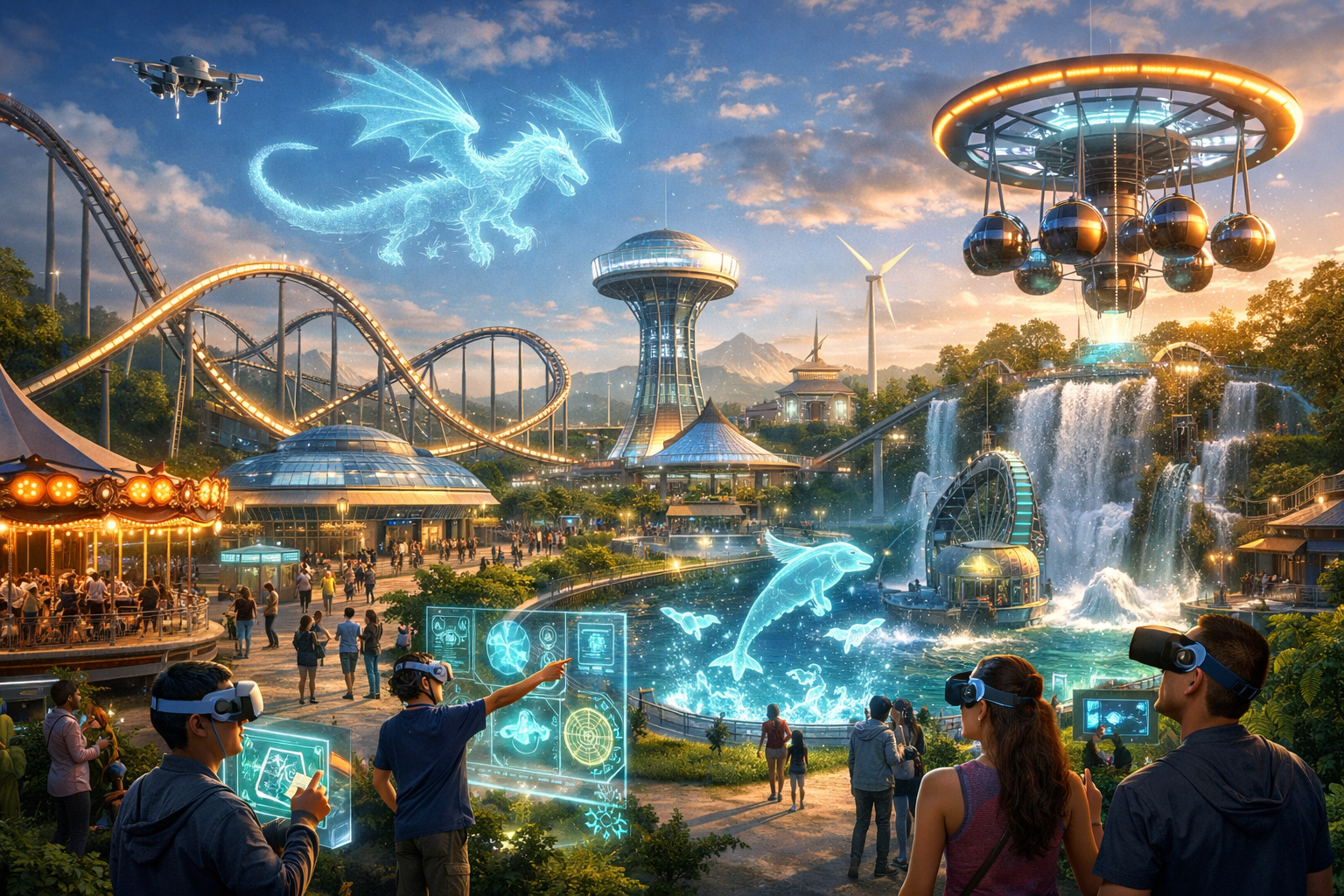
AR enables amusement ride producers to build digital worlds on top of real rides, minimizing the need to put up vast physical physical structures. Imagine experiencing a roller coaster when wear AR glasses that change the track into an automated space highway or a dragon's back.
As multimedia content can be refreshed often, this technique cuts construction prices and delivers novel and replayable experiences.
Captivating Lines
Line waiting has never been interesting. Downtime could evolve into a sensation with AR-enabled games and interactive storytelling in line. AR-based designs are currently being explored by leading amusement park builders as a way to improve visitor delight.
Persistent Experiences
They wish to take the park with him. After leaving the park, users can solve puzzles, interact with characters, or relive rides through AR-based mobile applications. Consequently, theme park ride developers must branch out into digital ecosystems in addition to physical rides.
3. Sustainability: Developing Greener Transport to Help Build a Greener Future
Sustainability is now desired, not given. Operators of amusement parks have been asking for rides with minimal practicable ecological impact as awareness of ecology and climate change expand. Manufacturers will be pushing the industry towards success if they adopt this alteration.
Eco-Friendly Materials
Innovation in ingredients, like as biodegraded polymers and recycled steel, is lowering the harmful carbon footprint of ride construction. Adopting eco-certified supply chains allows an amusement ride maker retain trust of park operators.
Integration for Renewable Energy
Water rides utilizing closed-loop systems, renewable energy carousels, and amusement parks with regenerative braking are no longer green ideas. These systems serve parks' ecological goals while reducing costs associated with operation. At the root of this shift are modern theme park ride producers.
Small and Effective Design
Along with their thrills, modern consumers crave sustainability. Compact rides that demand less time and resources but still offer an excellent level of entertainment value get more and more desirable at parks. Energy-conscious ride design is becoming an identity of the top amusement park businesses
4. Immersion and Storytelling: The Fundamentals of Next-Gen Parks
When technology is vital, however, interaction with people is still paramount. Passengers want to feel if they are a part of a story, not just ride.
Intellectual Property-Based Attractions
The demand for rides based on prominent worlds can be fostered by relationships with film studios, computer game organizations and streaming services. It goes to theme park ride producers who have the ability to collaborate closely regarding these IP integrations.
Experiences with Numerous Perceptions
Theaters involving vibration effects, water sprays, wind blasts, and fragrances become becoming increasingly common. 360-degree immersion is accomplished by including these features into rides. In one instance, a jungle ride could consist of mist sprays, earthy perfumes, and dynamic lighting that changes direction timed with the soundscape.
5. Hybrid Entertainment: Mixing Digital and Physical Settings
The boundary between physical and digital entertainment grows less clear. Younger generations want digital presence at amusement parks because they became dependent on gaming and online entertainment.
Rides with gam
Gen Z and Gen Alpha include interactive shooting galleries, automated dark rides, and laser-tag roller coasters. In accordance, the greatest amusement park engineers are establishing gamified attractions that allow people to compete, earn points, and access private elements.
Integration for Social Media
Viral marketing opportunities are presented by rides that automatically take pictures, shoot videos, or distribute AR-enhanced shots to visitors' social media accounts. Designing attractions with integrating creating content capabilities is a successful strategy by amusement ride creators.
6. The Manufacturer's Commitment to Future Growth
The mission of a theme park ride developer or amusement ride maker has never been more critical to the industry. For a company to stay active, companies need to:
Invest in R&D: The only way ahead is continuous innovation.
Work with Tech Associates: Working together with startups in AI, AR, and sustainability may bring new perspectives.
Adopt Flexible Design: Create rides future-proof through letting them adapt to altering tastes.
Highlight Safety + Sustainability: Use eco-friendly and artificial intelligence-powered technology for security to establish the trust of operators and passengers.
Conclusion: Accepting the Shift
The latest phase for creativity is settling on the amusement park sector. AR is making rides more immersive, AI is making parks smarter, and sustainability is making operations more accountable. Parks are still places of wonderment and creative thinking nonetheless since of narrative and experiential elements.
What works for the top theme park ride creators, ride manufacturers, and amusement park builders is achieving a balance above creativity and practicality to create rides that excite, incite, and last. Companies who build moments that capture individual visitor's imagination over just building rides will be the victors of the future.